Extreme Wealth Inequality Threatens Democracy
By Virginia Orenstein
At its heart, democracy is about equality, fair representation, and the will of the people. But when laws and policies make existing wealth inequality even worse, it threatens the very foundation of democracy. This is because it creates a divided society and gives a small number of people vast resources they can use to distort politics, weaken our social bonds and hoard resources for themselves.
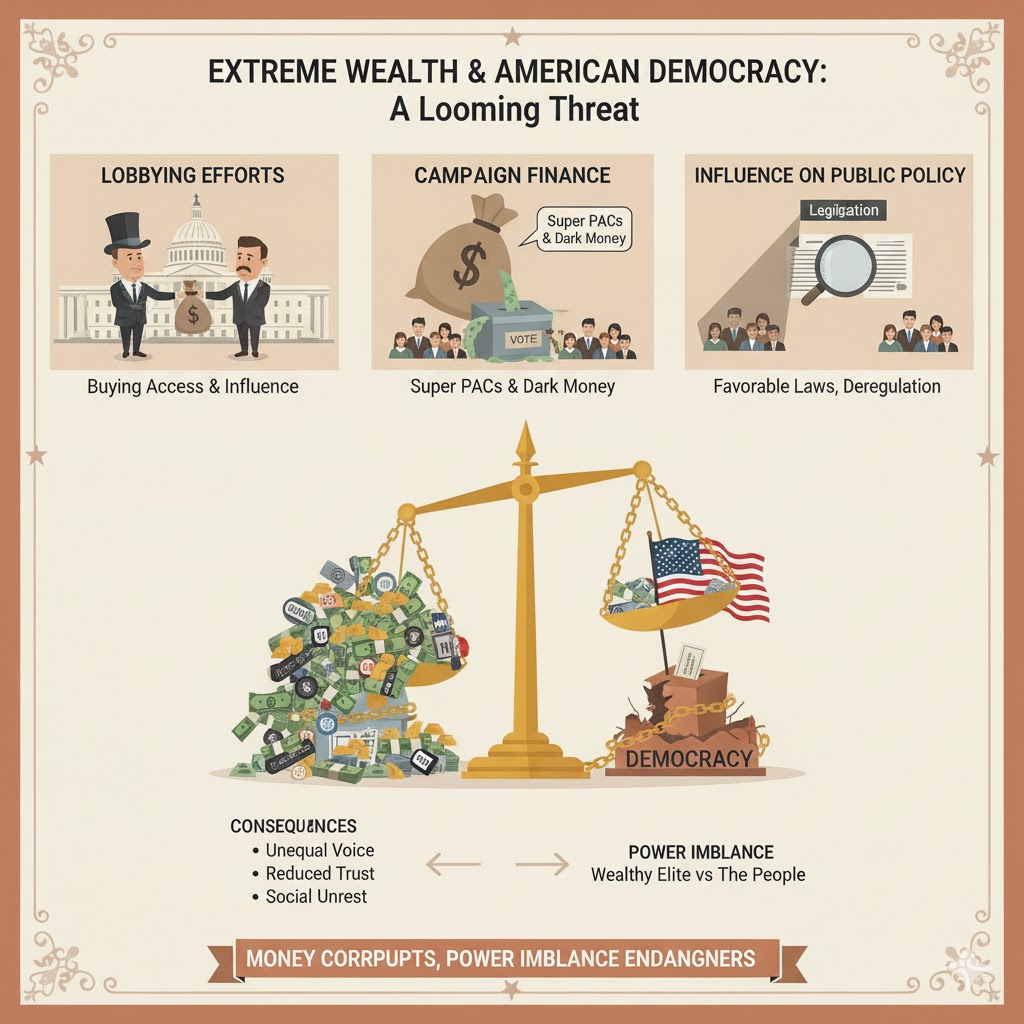
One of the biggest consequences of extreme wealth inequality is its effect on who gets an effective voice in politics. Wealth often turns into political influence. Very rich people and corporations can use their money to get what they want through big campaign donations, lobbying and funding political action groups that influence public opinion. This can create a system where the concerns of the wealthy are heard loudly, while the average person's voice (and wallet) are ignored. This inequality creates a costly, self-perpetuating cycle that harms the interests of the average citizen.
Because elected officials constantly need to raise money for their campaigns, they can become more focused on pleasing their wealthy donors and supporters than on serving the general public. This leads to policies that favor the rich at the expense of everyone else. This imbalance can make everyday people feel like their vote doesn't matter, leading to a lack of trust and a decline in civic participation.
Beyond direct political influence, extreme wealth inequality can also change what we talk about as a society. Wealthy individuals and organizations can own or heavily influence media outlets, think tanks, and schools. This allows them to push their own viewpoints and get laws and policies passed that serve their interests. For example, they might push for bigger tax breaks for the rich, allow banks to charge very high credit card interest rates (up to 30%) or let payday lenders charge up to 1900% annually in some states. There are many more examples in areas like healthcare and insurance. This control by the rich makes it harder for regular citizens to make ends meet and make informed choices when they vote.
Furthermore, extreme wealth inequality can limit a person's ability to move up in society and find opportunities—something crucial for a healthy democracy. If access to good education, healthcare and career advancement depends more on how much money you start with rather than on your talent or hard work, it can create a rigid class system.
This can lead to resentment and social division, making it hard for people to come together and solve common problems. A society split by huge economic differences is less likely to have constructive conversations and is more likely to experience social unrest, which can further destabilize democratic institutions.
The extreme wealth inequality we see in the United States today poses a serious threat to our democracy. By making some people poor, twisting political representation, manipulating public conversations and weakening our social connections, it can turn a government of the people, by the people, for the people into a system that mainly serves a privileged few. To address this growing problem, we need smart policy changes that promote economic fairness, strengthen campaign finance rules and create more equal opportunities for everyone. Only by working toward a more balanced economic landscape can we ensure that the promise of democracy remains real and meaningful for all citizens